
Chuck Jones Art Gallery
Gallery updated on Friday, June 12, 2026
Authorized Dealer
Limited Editions
Numbered Series
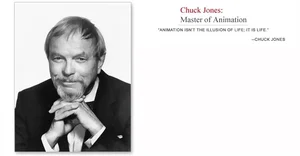
In a career spanning over 60 years, Jones made more than 300 animated films, winning three Oscars as director and in 1996 an honorary Oscar for Lifetime Achievement. Among the many awards and recognitions, one of those most valued was the honorary life membership from the Directors Guild of America.
During the Golden Age of animation Jones helped bring to life many of Warner Bros. most famous characters”Bugs Bunny, Daffy Duck, Elmer Fudd and Porky Pig. The list of characters he created himself includes Road Runner, Wile E. Coyote, Marvin Martian, Pepe le Pew, Michigan J. Frog and many others. He also produced, directed and wrote the screenplays for "Dr. Seuss How the Grinch Stole Christmas," a television classic, as well as the feature-length film "The Phantom Tollbooth." In addition, Jones was a prolific artist whose work has been exhibited at galleries and museums worldwide.
Jones often recalled a small child who, when told that Jones drew Bugs Bunny, replied: "He doesn t draw Bugs Bunny. He draws pictures of Bugs Bunny." His point was that the child thought of the character as being alive and believable, which was, in Jones belief, the key to true character animation.
Born on September 21, 1912 in Spokane, Washington, Jones grew up in Hollywood where he observed the talents of Charlie Chaplin and Buster Keaton and worked occasionally as a child extra in Mac Sennett comedies. After graduating from Chouinard Art Institute in Los Angeles (now California Institute of the Arts) Jones drew pencil portraits for a dollar a piece on Olvera Street. Then, in 1932, he got his first job in the fledgling animation industry as a cel washer for former Disney animator, Ubbe Iwerks. It was at Iwerks Productions that he met Dorothy Webster, to whom he was married in 1932.
In 1936 Jones was hired by Friz Freleng as an animator for the Leon Schlesinger Studio (later sold to Warner Bros.). Jones admired and revered Freleng for the rest of his life, saying, "No one except Tex Avery had as perfect a sense of timing as did Friz Freleng."
In 1937 his daughter, Linda, was born, and in 1938 he directed his first film, The Night Watchman.
He worked with and for directors Tex Avery and Bob Clampett until the early forties when they left the studio, and for the remainder of his years at Warner Bros. he worked in parallel with Directors Freleng and Robert McKimson. He remained at Warner Bros. until the studio was closed in 1962.
During those years, sometimes referred to later as the Golden Years of Warner Bros. animation, arguably some of the most enduring cartoons ever made were produced; most of them still enjoying worldwide recognition daily.
When Warner Bros. closed, and after a very short stay at the Disney Studios, Jones moved to MGM Studios, where he created new episodes from the Tom and Jerry cartoon series. While there, in addition to The Phantom Tollbooth and Dr. Seuss How the Grinch Stole Christmas, Jones directed the Academy Award winning film, The Dot and the Line.
Jones established his own production company, Chuck Jones Enterprises, in 1962 and produced nine half-hour animation films for television including Rudyard Kipling s Rikki Tikki Tavi and The White Seal.
After the death of his first wife, Jones met and married the love of his life, Marian Dern, who remained his best friend, lover and companion for the rest of his life.
In the late 70s Jones and his daughter, Linda, pioneered a continuing art business featuring limited edition images created by Jones depicting scenes from his most enduring cartoons. He continued to support his daughter s business, generously making appearances, drawings and paintings, in addition to signing countless editions of images, which continue to delight collectors and fans worldwide.
One of his films, the Wagnerian mini epic, What s Opera, Doc? was inducted into the National Film Registry for being "among the most culturally, historically and aesthetically significant films of our time."
In recent years, Jones work has been honored at film festivals and museums throughout the world, including a one-man retrospective at the Museum of Modern Art in New York City. His autobiography, Chuck Amuck, appeared in 1989, now in its fifth printing. Chuck Reducks, his follow-up to the first book, was published two years later.
In 2000, Jones established the Chuck Jones Foundation, designed to recognize, support and inspire continued excellence in art and the art of classic character animation. Plans for the Foundation include scholarships, library resources, touring exhibits, a lecture series and access to film, notes and drawings.
Director Peter Bogdanovich once explained the enduring appeal of Jones work: "It remains, like all good fables and only the best art, both timeless and universal."
After hearing that Jones had died, a four-year-old child asked her mother, between sobs, "Does this mean the bunny won t be in the barber chair any more?" The answer is, "No, the bunny will be in the barber chair forever."
During the Golden Age of animation Jones helped bring to life many of Warner Bros. most famous characters”Bugs Bunny, Daffy Duck, Elmer Fudd and Porky Pig. The list of characters he created himself includes Road Runner, Wile E. Coyote, Marvin Martian, Pepe le Pew, Michigan J. Frog and many others. He also produced, directed and wrote the screenplays for "Dr. Seuss How the Grinch Stole Christmas," a television classic, as well as the feature-length film "The Phantom Tollbooth." In addition, Jones was a prolific artist whose work has been exhibited at galleries and museums worldwide.
Jones often recalled a small child who, when told that Jones drew Bugs Bunny, replied: "He doesn t draw Bugs Bunny. He draws pictures of Bugs Bunny." His point was that the child thought of the character as being alive and believable, which was, in Jones belief, the key to true character animation.
Born on September 21, 1912 in Spokane, Washington, Jones grew up in Hollywood where he observed the talents of Charlie Chaplin and Buster Keaton and worked occasionally as a child extra in Mac Sennett comedies. After graduating from Chouinard Art Institute in Los Angeles (now California Institute of the Arts) Jones drew pencil portraits for a dollar a piece on Olvera Street. Then, in 1932, he got his first job in the fledgling animation industry as a cel washer for former Disney animator, Ubbe Iwerks. It was at Iwerks Productions that he met Dorothy Webster, to whom he was married in 1932.
In 1936 Jones was hired by Friz Freleng as an animator for the Leon Schlesinger Studio (later sold to Warner Bros.). Jones admired and revered Freleng for the rest of his life, saying, "No one except Tex Avery had as perfect a sense of timing as did Friz Freleng."
In 1937 his daughter, Linda, was born, and in 1938 he directed his first film, The Night Watchman.
He worked with and for directors Tex Avery and Bob Clampett until the early forties when they left the studio, and for the remainder of his years at Warner Bros. he worked in parallel with Directors Freleng and Robert McKimson. He remained at Warner Bros. until the studio was closed in 1962.
During those years, sometimes referred to later as the Golden Years of Warner Bros. animation, arguably some of the most enduring cartoons ever made were produced; most of them still enjoying worldwide recognition daily.
When Warner Bros. closed, and after a very short stay at the Disney Studios, Jones moved to MGM Studios, where he created new episodes from the Tom and Jerry cartoon series. While there, in addition to The Phantom Tollbooth and Dr. Seuss How the Grinch Stole Christmas, Jones directed the Academy Award winning film, The Dot and the Line.
Jones established his own production company, Chuck Jones Enterprises, in 1962 and produced nine half-hour animation films for television including Rudyard Kipling s Rikki Tikki Tavi and The White Seal.
After the death of his first wife, Jones met and married the love of his life, Marian Dern, who remained his best friend, lover and companion for the rest of his life.
In the late 70s Jones and his daughter, Linda, pioneered a continuing art business featuring limited edition images created by Jones depicting scenes from his most enduring cartoons. He continued to support his daughter s business, generously making appearances, drawings and paintings, in addition to signing countless editions of images, which continue to delight collectors and fans worldwide.
One of his films, the Wagnerian mini epic, What s Opera, Doc? was inducted into the National Film Registry for being "among the most culturally, historically and aesthetically significant films of our time."
In recent years, Jones work has been honored at film festivals and museums throughout the world, including a one-man retrospective at the Museum of Modern Art in New York City. His autobiography, Chuck Amuck, appeared in 1989, now in its fifth printing. Chuck Reducks, his follow-up to the first book, was published two years later.
In 2000, Jones established the Chuck Jones Foundation, designed to recognize, support and inspire continued excellence in art and the art of classic character animation. Plans for the Foundation include scholarships, library resources, touring exhibits, a lecture series and access to film, notes and drawings.
Director Peter Bogdanovich once explained the enduring appeal of Jones work: "It remains, like all good fables and only the best art, both timeless and universal."
After hearing that Jones had died, a four-year-old child asked her mother, between sobs, "Does this mean the bunny won t be in the barber chair any more?" The answer is, "No, the bunny will be in the barber chair forever."
Chuck Jones Current Portfolio
Fast and Furryous
Interplanetary Law
Valentine Season
United Hare Lines
One Froggy Evening Museum Collection
Hare Breath Hurry
United Hare Lines
Zoom And Bored II
For Linda at 15
Portrait De Cochon
Kill Da Wabbit (hand-Signed)
The Good, The Bad And The Hungry
Herr Loves Me, Hare Loves Me Not!
Whiskers Mother
Desert Duo (Set of 2)
Love Is In The Hare
The Great Chase
Monster Pin-Up
Hypo-Duck-Riac
My Stars!
The Great Chase
Sam Sheepdog
Claude Cat
Daffy Duck For President
Long Haired Hare
Hare Hazard
Wile E. Van Gogh
Hare-Thodontia
Spear And Magic Helmet
Pepe Le Pew Romeo And Juliet
Pepe Le Pew: Stinky
It Is to Laugh!
Still A Stinka
Im In The Money
Chez Bugs
Whats Opera Doc
Desert Duo Road Runner
Nude Duck Descending A Staircase
Zip And Snort
All You Knead Is Love
Opticular Successimus
Two Scents Worth
Wile E. Van Gogh
Desert Duo Willie Coyote
One Froggy Evening--1955
Broomstick Bunny "directors Cut"
Rabbit-Plasty
Toulouse Le Duck
Whats Opera Doc? Layout Portfolio II
Haredevil Hare
All You Knead Is Love
Vincent Van Coyote
Wile E. Van Gogh
14 Carrot Offering
Witch Hazel
Splitting Hares
Feline Frame-Up
Fast And Famished
Birds Eye View
Bunny Prince Charlie
Invasion Of The Bunny Snatchers
Daffy Screwball
Bugs Bunny: Stop On The Lot
Ewe Thief!
Father Of The Bird
Too Rash
Spring Training
Whats Opera Doc? Giclee/canvas
Persistence Of Carrots
Junyer Bear
Waiter, Theres A Fly In My Soup Or sonic
Mercy Melodies
Ralph Phillips
Beanstalk Bunny
Dynamite Hare
Charlie Dog
Mad As A Mars Hare
Monster Mohawk
In Character
Drag Strip
Porky Pig
Desert Duo (Set Of 2)
Hare Hazard
Acme Road Hog
September Morn
Bewitched Bunny 1954 A Golden Age Edition
My Stars!
United Hare Lines
Elmer Fudd
Near Miss